Buttermilk Drop Scones
Cooked in a pan rather than an oven, so they are ready in the time it takes to lay the table.
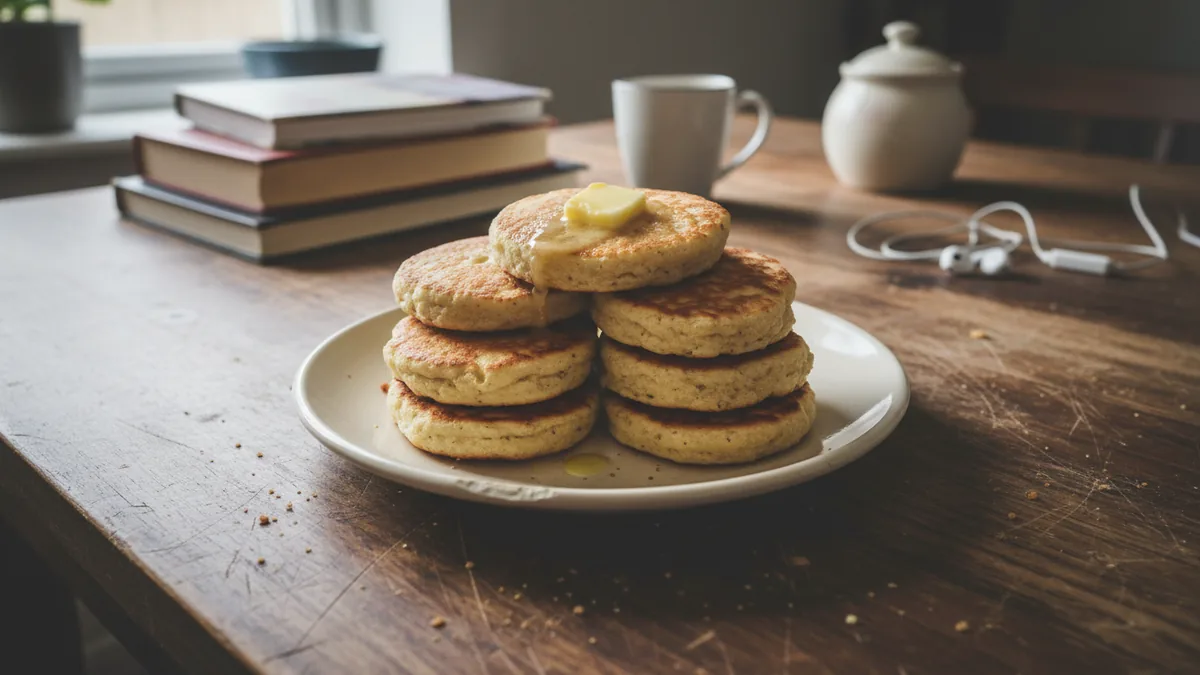
These are what get made when pancakes are wanted and there is no time to be careful. The batter is thicker, the scones are smaller, and they hold their shape without any skill involved.
Buttermilk and baking soda together is the whole leavening. The batter starts working the moment they meet, so it goes in the pan straight away rather than resting.
Ingredients
| Amount | Ingredient |
|---|---|
| 1 cup | all-purpose flour |
| 1 tbsp | sugar |
| 1/2 tsp | baking soda |
| 1/2 tsp | baking powder |
| 1/4 tsp | salt |
| 1 cup | buttermilk |
| 1 | egg |
| 2 tbsp | butter, melted, plus more for the pan |
Method
- Whisk the dry ingredients in one bowl and the wet in another.
- Pour the wet into the dry and stir about ten times. Lumps are correct. A smooth batter makes tough scones.
- Butter a pan over medium-low heat. Lower than pancakes, because these are thicker.
- A heaped tablespoon per scone. Cook until bubbles rise and the edges stop looking wet, about two minutes.
- Turn once and give them another ninety seconds.
- Stack them under a dish towel while the rest cook.
Notes
- No buttermilk: a cup of milk with a tablespoon of lemon juice, left ten minutes. It is not the same and it is close.
- The first one is always the worst one. That is the pan telling you its temperature.
- They go stale within hours, which is why the batch is small.
Questions
Can the batter wait?
Twenty minutes at most, and they rise less. The reaction starts when the soda meets the buttermilk and it does not restart.
Why lumps?
Stirring develops gluten. Every extra stir past ten makes them chewier, and not in a good way.
Sweet or savory?
As written, barely sweet. Leave out the sugar and they take cheese and butter perfectly well.