Product review
Cardio Honey: What the Order Pages Say, What the Research Says, and What It Costs
A capsule sold for cardiovascular wellness, built on hawthorn, garlic, olive leaf and hibiscus. We opened the checkout, read the refund policy line by line and went through the published trials on each of the four. Here is all of it, including the parts that are easy to click past.
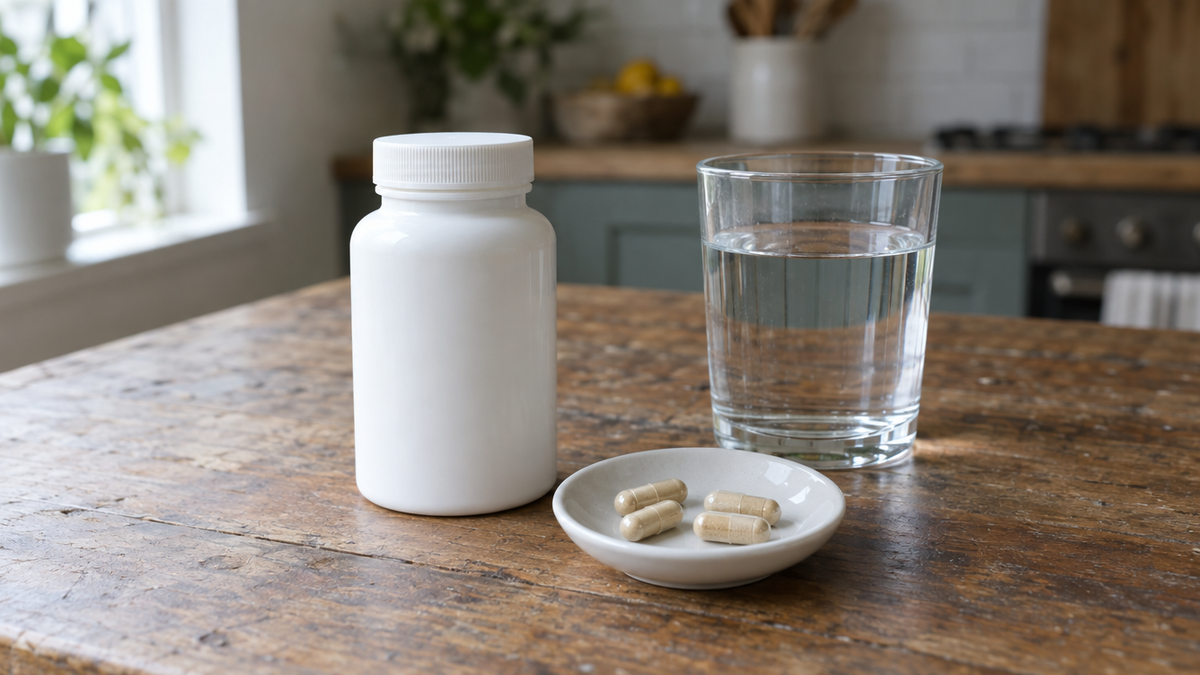
This is the product readers asked about after our page on salt, the second pill and swollen ankles. It is a dietary supplement, we are not the seller, and this page carries an advertising link. What follows is everything we could establish from the seller’s order pages, from the checkout and from the published research, in the order somebody deciding whether to buy would want it.
One thing first, because it shapes the rest. A supplement is not a blood pressure medicine and is not reviewed as one. Nothing below is a reason to skip a dose, halve a tablet or put off an appointment. If the home readings are high, the person to tell is the one who writes the prescription.
What it actually is
| Form | Capsules, taken by mouth. The name suggests a jar and a spoon; the seller’s own description is a dietary supplement in capsule form. |
|---|---|
| What the seller says it is for | developed to support cardiovascular wellness, antioxidant protection, and healthy circulation.That is the seller’s wording. It is a support claim, not a treatment claim, and the difference is the law: a supplement may not say it treats a condition. |
| What is named in it | Four botanicals: hawthorn leaf and flower, garlic bulb, olive leaf and hibiscus flower. The page also says essential vitaminsand does not say which. |
| Doses | Not shown. There is no supplement facts panel and no figure in milligrams on the order page or at checkout. |
| Capsules per bottle, capsules per day | Not stated in numbers. The order page calls two bottles a 60-day supply, which makes one bottle a month. |
| Where it is made | The order page carries a Made in the USAbadge. The facility is not named. |
| Who takes the payment | A third-party retailer, BuyGoods. The checkout says so, and says the charge appears on a bank statement under that name. |
The missing milligrams matter more than they sound. Every trial used a specific amount of a specific extract, and a capsule with no stated amount cannot be set beside any of them. So the next section does the only honest version of the job: it takes the four plants the seller names and sets out what each one has shown, at the dose the researchers used.
Four ingredients, and what stands behind each
All four have been tested against placebo in people. What follows is the best published evidence we could find for each, with the size of the effect in the researchers’ own numbers.
Hawthorn
One randomised trial is quoted more than any other. Seventy-nine people with type 2 diabetes, most of them already on blood pressure medicine, took 1,200 milligrams of hawthorn extract a day or a placebo for sixteen weeks. The bottom number fell from 85.6 to 83.0 in the hawthorn group and went from 84.5 to 85.0 on placebo. The top number is the sentence people leave out: There was no group difference in systolic blood pressure reduction from baseline
— British Journal of General Practice, 2006, volume 56, pages 437 to 443. About two and a half points on the bottom number, at 1,200 milligrams a day, in one study of 79 people.
Garlic
The one with the biggest numbers and the least behind them. The Cochrane review found two trials and 87 people in total. Garlic appeared to lower the top number by 10 to 12 and the bottom by 6 to 9, and the reviewers then wrote the sentence that matters: this difference in blood pressure reduction falls within the known variability in blood pressure measurements.
Their conclusion on the outcomes people actually care about is blunt: There is insufficient evidence to determine if garlic provides a therapeutic advantage versus placebo in terms of reducing the risk of mortality and cardiovascular morbidity
— Cochrane Database of Systematic Reviews, 2012, DOI 10.1002/14651858.CD007653.pub2.
Olive leaf
A 2021 review pooled five trials and 325 patients with raised or high readings. At 500 milligrams of olive leaf extract a day, for at least eight weeks, the top number fell by 5.78 against placebo or no treatment, with no significant change in the bottom number. At 1,000 milligrams a day of a combined formula, there was no significant change in either. The authors’ own last line is that the review may not provide a robust conclusion regarding the effects of olive leaf extract on cardiometabolic profile due to the limited number of participants in the included trials
— PeerJ, 2021, DOI 10.7717/peerj.11173.
Hibiscus
The best pooled figure of the four. Five randomised trials and 390 participants, and hibiscus lowered the top number by 7.58 and the bottom by 3.53. Two things sit next to that. The review’s title calls the thing studied sour tea
, and its opening lines are about hibiscus beverages, which is a cup and not a capsule. And the conclusion ends where the others do: Further well designed trials are necessary to validate these results
— Journal of Hypertension, 2015, DOI 10.1097/HJH.0000000000000585.
The references the seller publishes
The order site has a page headed Scientific References, and it is worth opening. On the day we read it, it listed eight papers. Not one is about hawthorn, garlic, olive leaf or hibiscus. They are about bacopa, tyrosine, caffeine, huperzine and B vitamins, and the introduction describes a formula of essential vitamins, natural nootropics, and adaptogens
with benefits for memory, focus, energy, and cognitive health
. The page names a second product alongside this one. It reads like a reference list written for a memory supplement and left in place. Whatever the explanation, the studies a buyer is pointed to are not studies of what the order page says is in the bottle.
How big is five to eight points?
The pooled figures above run from nothing on the top number, for hawthorn, to five to eight points for olive leaf and hibiscus, at doses this capsule does not state. Whether that is a lot depends on what it is set beside.
Cutting salt by about 4.4 grams a day, kept up for at least four weeks, lowered the top number by 4.18 on average and by 5.39 in people who already had high readings — Cochrane Database of Systematic Reviews, 2013, DOI 10.1002/14651858.CD004937.pub2. A full change of eating pattern did more: in the DASH trial, 459 adults were fed a diet rich in fruit, vegetables and low-fat dairy for eight weeks, with salt held the same in both groups. Compared with a typical American diet, it lowered the top number by about 5.5 points, and by 11.4 among the 133 who started with hypertension — New England Journal of Medicine, 1997, DOI 10.1056/NEJM199704173361601.
And the yardstick for all of it comes from the drug trials. Across 147 randomised trials, a fall of ten points in the top number went with 22 per cent fewer coronary events and 41 per cent fewer strokes — BMJ, 2009, DOI 10.1136/bmj.b1665. That is the scale on which a blood pressure treatment is judged. The plant trials measured a reading over weeks or months and stopped there.
What it is not shown to do
- It has no published trial of its own. A search of PubMed for the product name on 8 October 2026 returned no records. Everything above is about single ingredients at stated doses, not about this capsule.
- It is not a replacement for a prescription. No supplement in this category has been shown to prevent a heart attack or a stroke.
- It is not checked before sale. Dietary supplements are not assessed for effectiveness before they go on the market. The claim on the page is the seller’s, and nobody has signed it off.
Safety, as far as it can be said
With no doses in front of us, the safety advice can only be general, and it is short. Three of the four plants were studied because they may lower a reading, and most people looking at this product already take something that does. Bring the bottle to whoever prescribes the blood pressure medicine and let them read the label. Do not use a supplement as a reason to change a dose. And if the readings at home are climbing, or come with chest pain, breathlessness or a sudden headache, that is not a supplement question.
What it costs
Read from the checkout on 8 October 2026. There are three orders, and the buttons on this page open the smallest.
The order the buttons open
2 bottles
$79.00 /bottle
$158.00 + $9.99 shipping · $167.99 total
The checkout also prints a “normal price” above each of those: $358.00, $537.00 and $1,074.00. Nothing on the page says where or when it was sold at those figures, so we treat them as reference numbers and not as savings. The per-bottle prices are the ones the order page prints, and they match the totals divided by the bottles.
Advertisement
See the order and price at checkout
Advertising link to a third-party checkout. This publication is paid a commission if a purchase is made, at no extra cost to the buyer.The refund policy, read properly
The checkout says the order is protected by our 60-Day Money-Back Guarantee
. The document that governs it is the seller’s refund policy, and it is stricter than the sentence.
| Window | Sixty days, and the seller’s pages do not agree on when it starts. The refund policy says within 60 days of delivery. The order page says sixty days from the original purchase date, and so does the shipping policy. Count from the day of purchase and neither version can be used against a claim. |
|---|---|
| Permission first | A return needs a code issued by support before anything is posted. Returns without a valid RMA number will not be accepted. |
| Seven days to post | Once the code arrives, the clock is short: Within 7 days of receiving your RMA, by a trackable service. |
| Send the bottles back? | Yes, all of them, empty or unopened, together with any included bonuses or gifts. |
| Who pays the postage | The buyer, unless the wrong or a damaged item was sent. |
| Where to | A fulfilment address in Aurora, Colorado, printed in the policy. |
| What comes back | Not the full amount. Shipping and handling are non-refundable, and approved refunds are subject to a return-processing fee of up to 20% of the order value. On the two-bottle order that is up to $31.60 kept, on top of the $9.99. |
| How often | Only one refund per product per household within a 12-month period. |
| How long | Inspection in three to five business days after the parcel arrives, then five to ten business days to reach a card. |
The policy also describes a second route: the seller may offer a partial refund with no return, and accepting it closes your order and ends the right to a further return
. It is described as discretionary. Anybody offered it should work out the full refund less the fee and the postage before saying yes.
Four things to watch at checkout
None of them is hidden. Each costs money if clicked past.
- The subscription box. The order page carries a badge that says
One-Time Fee, No Autoship
. The checkout it leads to has a “Subscribe & Save” option that takes ten per cent off and turns the order into a monthly shipment. The terms beside it say the cardwill be charged the amount matching your selected package size
once per month, and that shipments are stopped by telephone. Leave it unticked for a one-off order. - The upgrade. Under the total there is a “VIP Upgrade” at $19.95, described as faster delivery with insurance against loss or damage. It is an extra, and the total printed above it does not include it.
- The timer. The checkout shows a countdown saying the order is reserved for a number of minutes. Nothing on the page says what happens when it reaches zero, and a clock is not a reason to skip reading the total.
- The pages after payment. Once the card has gone through, the buyer is shown a further offer before the order is confirmed, under a heading that says the order is not complete yet. After a two- or three-bottle order it is six more bottles at $33 a bottle, $198 in all. Declining it opens a second screen with the same six bottles for $114, which is $19 a bottle. After a six-bottle order the same sequence offers twelve bottles at $29 a bottle and then twelve for $228. Each screen has a decline link at the bottom.
The arithmetic of that last point is worth a moment. The same capsule that costs $79 a bottle on the first page is offered at $19 a bottle two screens later. Anybody who intends to take it for more than two months will pay far less per bottle after the first payment than before it, and anybody who only wanted two bottles should know the lower price exists before deciding the first one was a bargain.
Our verdict. The four plants on the order page have each been through placebo-controlled trials, and that is more than can be said for much of this aisle. The results are modest and tied to doses: nothing on the top number for hawthorn, about six points for olive leaf at 500 milligrams a day, about seven and a half for hibiscus studied largely as tea, and a garlic figure its own reviewers would not stand behind. How much of any of them is in this capsule is not on the pages a buyer passes on the way to paying, the seller’s reference list is about different ingredients, and the product itself has no published trial.
Against that: the checkout is run by a named third-party retailer, the price is printed before the card is asked for, and there is a sixty-day window for anybody willing to ask for a return code, post every bottle back at their own cost and accept a deduction. As an addition to treatment that is already working, discussed with the prescriber and with the label in hand, it is a modest bet on a modest effect. As a substitute for treatment, it is the wrong purchase.
Advertisement
Advertising link. The prices above were read on 8 October 2026 and are the seller’s to change.Disclosures
Advertising disclosure. This page carries paid advertising links. If a reader follows one and buys something, this publication is paid a commission, at no additional cost to the reader. That arrangement did not change a single figure above: the trials are cited so that anybody can check them, and the ones that undercut the category are quoted at the same length as the ones that support it.
We are not the seller. This publication does not make, own, stock or ship this product, cannot process an order and cannot issue a refund. Questions about an order go to the support address on the seller’s contact page.
Health information notice. These statements have not been evaluated by the Food and Drug Administration. This product is not intended to diagnose, treat, cure or prevent any disease. Dietary supplements are not assessed for effectiveness before they go on sale. Nothing on this page is medical advice or a reason to begin, stop or alter a prescription.