Olive Oil and Orange Cake
Oil rather than butter, which is why it is still soft three days later instead of dry by the second morning.
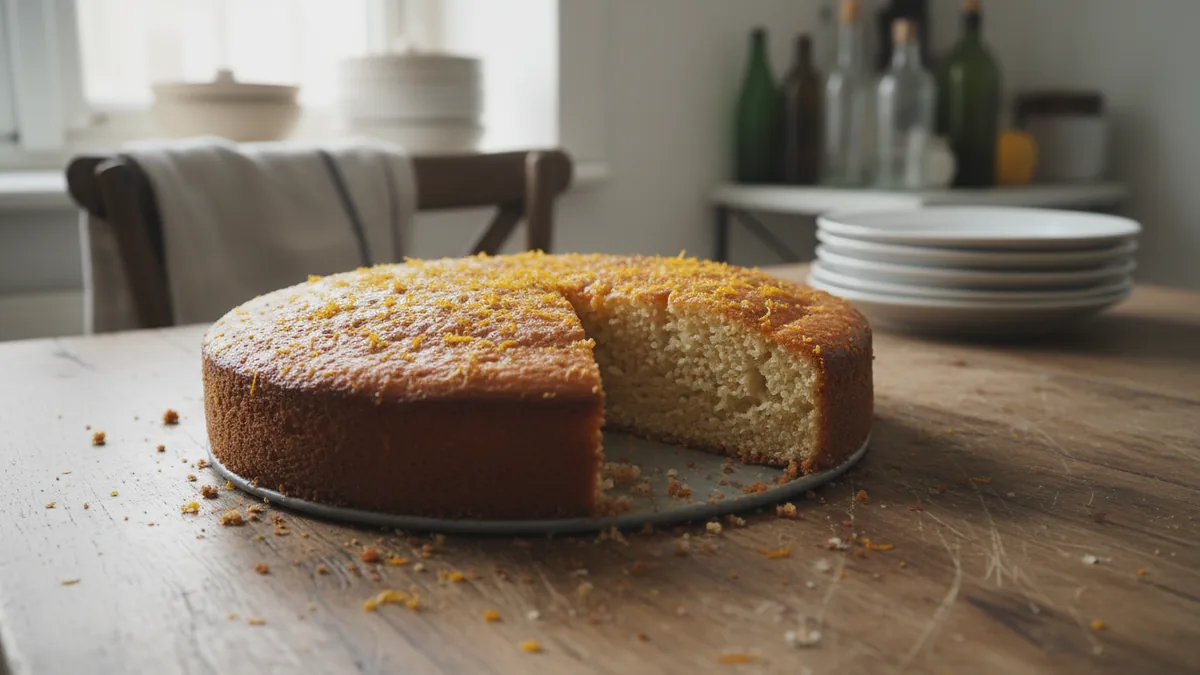
Butter is solid at room temperature and oil is not, and that single fact is why an oil cake keeps and a butter cake stales.
The olive oil is meant to be tasted. A mild supermarket bottle disappears; something with a bit of pepper to it makes the cake worth making.
Ingredients
| Amount | Ingredient |
|---|---|
| 1 cup | olive oil |
| 1 cup | sugar |
| 3 | eggs |
| 2 | oranges, zest of both and juice of one |
| 1 3/4 cups | all-purpose flour |
| 1 1/2 tsp | baking powder |
| 1/2 tsp | salt |
| 1/2 cup | plain yogurt |
Method
- Heat the oven to 350°F. Line a 9-inch pan.
- Beat the sugar with the orange zest first, with your fingers, until it smells like oranges. This takes thirty seconds and does more than any other step.
- Beat in the eggs, then pour in the oil slowly while beating.
- Fold in the flour, baking powder and salt, alternating with the yogurt and orange juice.
- Into the pan, forty minutes, until a skewer comes out with a crumb or two on it.
- Cool in the pan fifteen minutes before turning it out. It is fragile while hot.
Notes
- Rubbing the zest into the sugar is not optional in practice. Zest stirred in at the end tastes of much less.
- It improves on day two. On day one it tastes faintly of raw oil.
- A skewer that comes out perfectly clean means it went four minutes too far.
Questions
Can I use a different oil?
Sunflower works and makes a plainer cake. The recipe is built around tasting the olive oil.
Lemons instead?
Yes, three of them, and add two extra tablespoons of sugar. Lemons are sharper than oranges by more than they look.
Does it freeze?
Well, whole or in slices, up to three months.